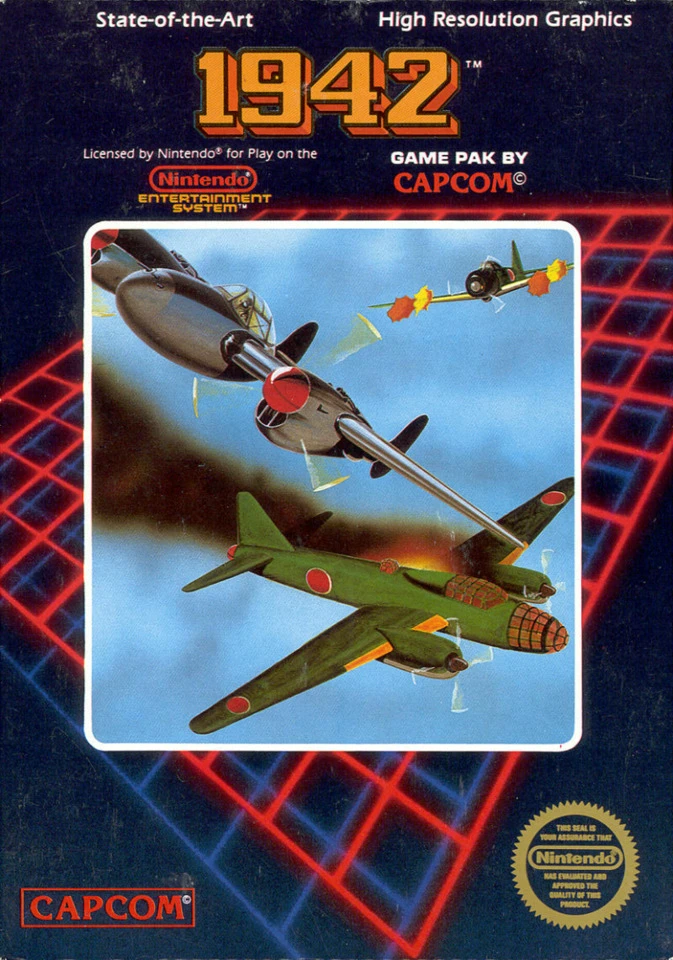
1942
1942 is Capcom’s classic 1984 vertically scrolling shoote...

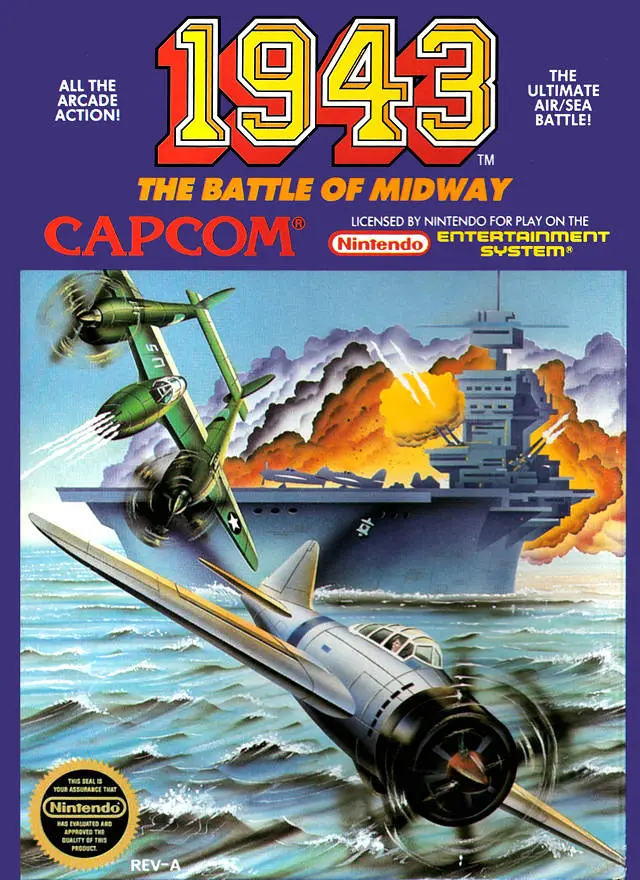
1943: The Battle of Midway (known in Japan as 1943: The Battle of Valhalla) is a vertically scrolling shoot-’em-up developed and published by Capcom. The arcade version launched in 1987, with the NES port following in Japan on June 20, 1988, and in North America in October 1988. Unlike the Micronics-developed NES port of 1942, Capcom handled the 1943 conversion itself, resulting in smoother performance and better presentation.
The player controls the P-38 Super Ace across 24 stages (expanded from the arcade’s 16). Early stages mix air-to-sea combat against battleships and aircraft carriers with pure aerial battles against bomber squadrons. After stage 16, the story reveals a decoy fleet, leading to additional stages culminating in the final confrontation.
Instead of one-hit deaths, the plane has a large fuel/energy meter that slowly depletes over time and drops when hit. Energy can be restored by collecting POW icons. The classic Loop maneuver returns for temporary invulnerability, and players can also unleash special screen-clearing attacks (lightning, tsunami, or cyclone) at the cost of energy. Power-ups cycle through different weapons such as Shotgun, 3-Way, Auto, Super Shell, and Laser.
The NES version uniquely allows permanent stat upgrades. Players allocate points to offense, defense, maximum fuel, special weapon availability, and weapon duration. Additional points are earned by revealing hidden items during stages. A password system supports continued progress. These changes give the home version more depth and strategic planning than the pure arcade experience.
The plane has a large fuel/energy bar that slowly drains over time and decreases when hit by enemies or projectiles. Collecting POW icons restores energy. When the bar reaches zero, the game ends.
The NES version adds permanent stat customization, expands the campaign to 24 stages, includes a password system, removes two-player co-op, and was developed in-house by Capcom for smoother performance.
At the start (and after finding hidden point items), players allocate points to five stats: offense, defense, maximum fuel, special weapon access, and special weapon duration. Higher investment unlocks better weapons and longer-lasting power-ups.
Yes. Pressing the appropriate buttons performs the classic vertical loop, granting temporary invulnerability. The number of available loops can be increased through upgrades and power-ups.
Yes. The NES version includes passwords that allow players to resume from later stages, supporting longer play sessions without needing to complete the entire game in one sitting.
Download directly from this site, or use a cloud drive link below
⚠️ Download Tips:
1942 is Capcom’s classic 1984 vertically scrolling shoote...
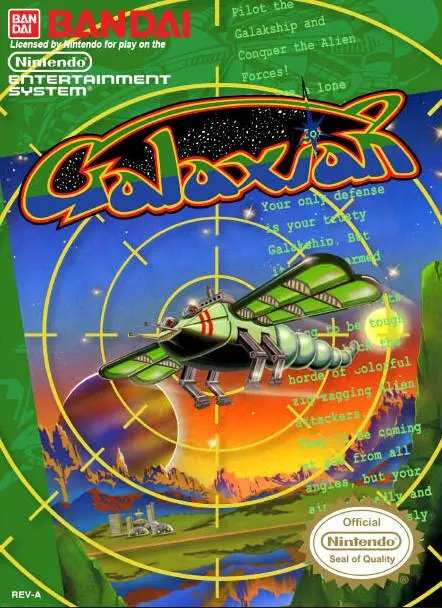
Galaxian is Namco’s pioneering 1979 arcade fixed shooter,...
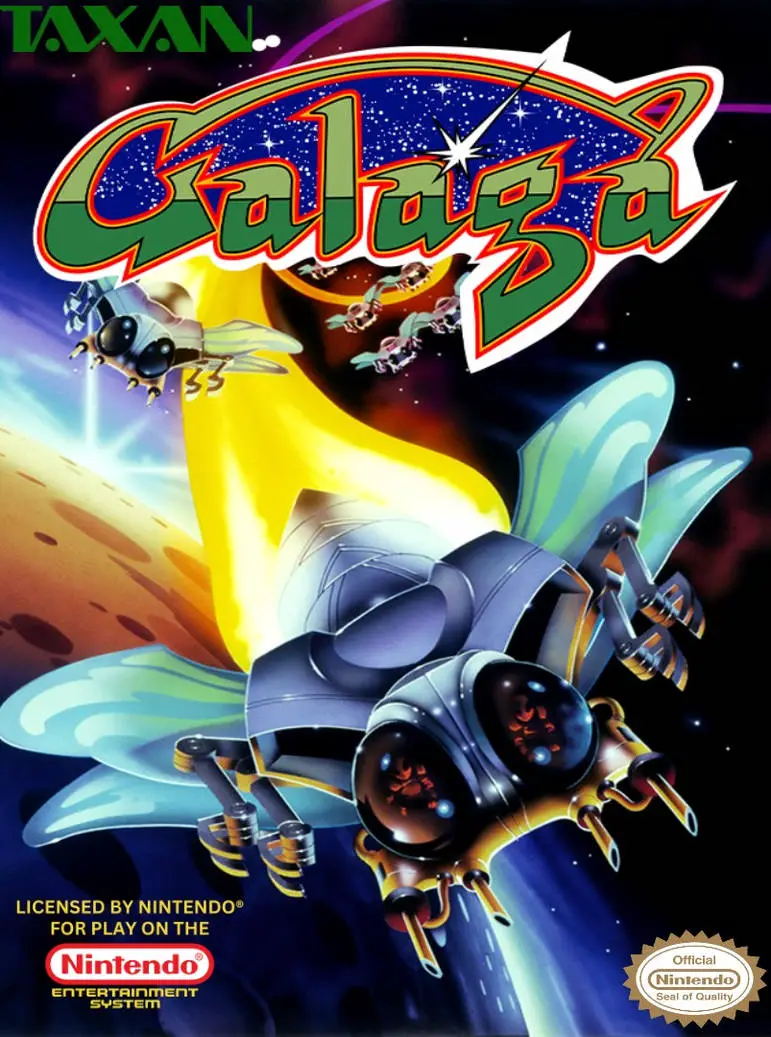
Galaga is Namco’s legendary 1981 arcade fixed shooter, fa...
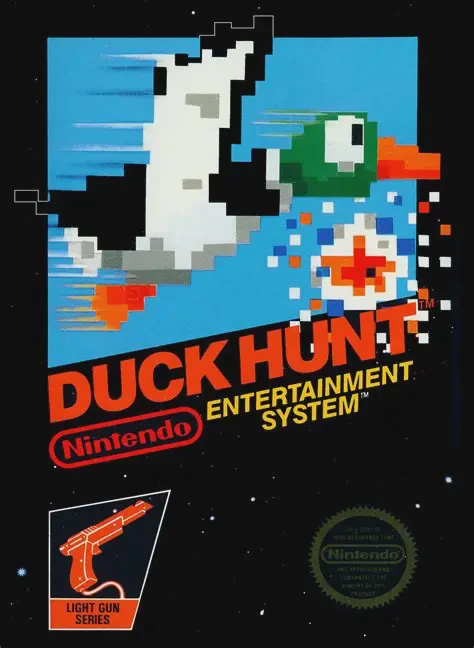
Duck Hunt is Nintendo’s classic 1984 light-gun shooter fo...
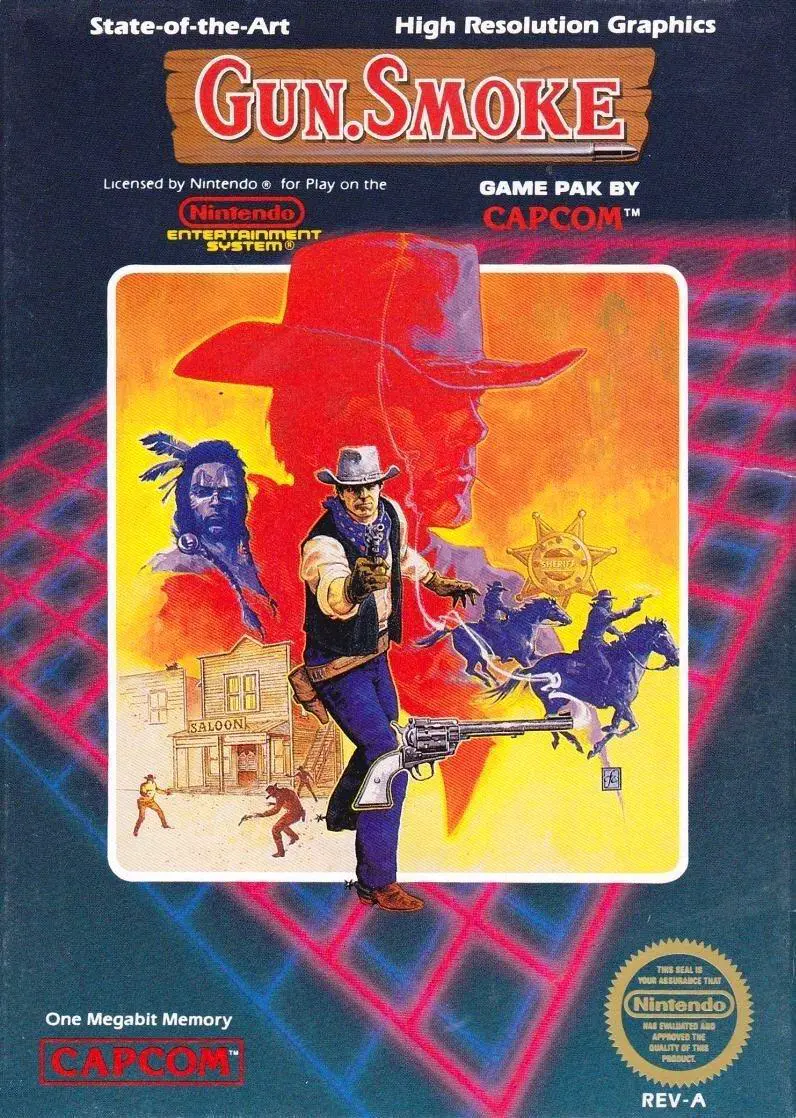
Gun.Smoke is Capcom’s 1985 vertically scrolling run-and-g...